 Health
Is Residential Mental Health Care Right for You: Free Guide To Read
- by admin1234
Mental health problems can feel heavy and hard. Some people need more than weekly therapy. Residential mental health care is a live-in program where you stay at a center and get daily support. It can help when symptoms are strong and life feels out of control.
Many people look for options like mental health treatment in Atlanta when home support is not enough. The right choice depends on your needs, safety, and daily struggles.
What Is Residential Care?
Residential care means you live at a treatment center for a short time. It is not a hospital. It feels more like a safe home with support.
You stay there day and night. You follow a daily plan. You meet with therapists. You join group talks. You learn coping skills.
Simple Definition
Residential care is:
- A live-in mental health program
- With 24-hour support
- For people who need more help than weekly therapy
It is not the same as emergency hospital care. It is also not the same as regular outpatient visits.
Why Do People Need This Level of Care?
Mental health problems can grow over time. Stress builds up. Trauma may stay hidden. Depression can get deeper.
Here are common reasons people need more help:
- Severe depression
- Strong anxiety or panic
- Trauma symptoms
- Mood swings
- Trouble sleeping for weeks
- Thoughts of self-harm
- Feeling unsafe at home
Sometimes therapy once a week is not enough. People may skip sessions. They may not use coping skills. Home stress can block progress.
That is when a higher level of care can help.
How Does Residential Treatment Work?
The program gives structure. Structure means a clear daily plan.
A Typical Day May Include:
- Morning check-in
- Group therapy
- One-on-one therapy
- Skill-building classes
- Healthy meals
- Quiet time
- Evening reflection
You also meet nurses or mental health staff. They watch your safety. They help manage medication if needed.
This steady routine helps calm the brain. It reduces chaos. It builds healthy habits.
Why Structure Helps
The brain likes routine. Routine lowers stress. When stress goes down, healing can begin.
Who Is Residential Care For?
This care is not for everyone. It is for people who:
- Tried therapy but did not improve
- Feel unsafe being alone
- Cannot manage daily tasks
- Need a break from a harmful home setting
- Have strong emotional ups and downs
It can help teens, adults, and sometimes older adults. Each program has age rules.
It is also helpful for people who need space to focus only on healing.
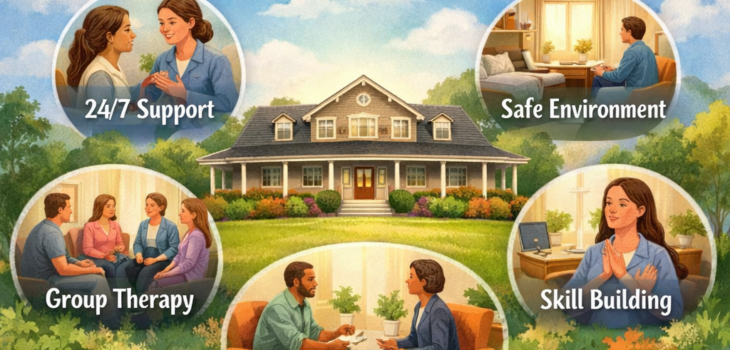
Key Benefits of Live-In Treatment
Residential mental health care offers strong support. Here are the main benefits:
1. 24-Hour Support
Help is always there. You are not alone at night.
2. Safe Environment
You stay away from triggers. Triggers are things that cause stress or bad memories.
3. Daily Therapy
You do not wait a week between sessions.
4. Peer Support
You meet others who understand your struggle.
5. Skill Practice
You learn:
- Breathing tools
- Grounding skills
- Healthy communication
- Emotional control steps
You practice them daily.
Real-Life Style Example
Anna felt deep sadness for months. She stopped working. She stayed in bed most days. Weekly therapy helped a little. But she still felt hopeless.
At a residential center, she followed a daily plan. She met others with similar struggles. She learned small coping steps. After several weeks, she felt stable enough to return home and continue outpatient therapy.
Not every story is the same. But many people improve with steady care.
Why the Problem Often Gets Worse at Home
Home can be stressful.
Common home problems include:
- Family conflict
- Work pressure
- No routine
- Poor sleep
- Access to harmful substances
When stress stays high, healing slows down.
Living at a treatment center removes many of these stressors.
Common Mistakes People Make
People often wait too long to get help.
Mistake 1: Thinking “It’s Not That Bad”
If symptoms stop you from working or caring for yourself, it is serious.
Mistake 2: Fearing Judgment
Getting help is not weakness. It is care.
Mistake 3: Comparing to Others
You do not need to be “worse” than someone else to deserve support.
Mistake 4: Leaving Too Soon
Some people leave early because they feel slightly better. Healing needs time.
Safety Tips and Warnings
Residential care is helpful, but it has limits.
- It is not a quick fix.
- It does not solve all life problems.
- You still need follow-up care after leaving.
Always check if the center:
- Has licensed staff
- Offers medical support
- Provides clear treatment plans
- Respects patient rights
If you feel unsafe in any program, report it.
Cost and Pricing
Costs vary by location and length of stay.
Factors that affect price:
- Length of stay (weeks or months)
- Type of therapy offered
- Private vs. shared rooms
- Insurance coverage
Some insurance plans cover part of the cost. Others may require pre-approval.
It is important to:
- Call your insurance provider
- Ask what is covered
- Request a full cost breakdown
Never assume all services are included. Ask questions first.
Prevention and Best-Practice Tips
Even if you enter a live-in program, long-term healing takes work.
Before Entering Care
- Write down your goals
- List your symptoms
- Share medical history
During Treatment
- Attend all sessions
- Be honest about feelings
- Practice skills daily
After Leaving
- Continue outpatient therapy
- Follow medication plans
- Build a simple daily routine
- Stay connected to support groups
Healing is a process, not a single event.
Read more: How Book Publishing Services Help Authors Succeed | Key Benefit
When to Seek Professional Help
You should seek professional help if:
- You have thoughts of self-harm
- You cannot get out of bed for days
- You stop eating or sleeping
- You feel out of control
- You cannot work or attend school
- You feel unsafe at home
If there is immediate danger, contact emergency services right away.
Early help can prevent bigger problems later.
Is This the Right Choice for You?
Ask yourself:
- Have I tried regular therapy without success?
- Do I need daily support?
- Is my home making things worse?
- Do I feel unsafe being alone?
If you answered yes to many of these, a structured program may help.
Still, this choice should be made with a licensed mental health professional. They can assess your risk and needs.
A Soft Educational Recommendation
It helps to speak with a qualified mental health provider who understands different levels of care. Some centers, such as Southern Live Oak Wellness, focus on structured programs that support long-term healing. Always research carefully and choose a program that fits your clinical needs, not just convenience.
Conclusion
Choosing the right level of support is important. Residential mental health care can offer safety, structure, and daily therapy when symptoms feel overwhelming. It is not for everyone, but for some people, it can be a strong step toward stability and recovery.
FAQs
How long do people stay in residential programs?
Most stays last a few weeks to a few months, depending on needs.
Is residential treatment the same as a hospital stay?
No, it is less intensive than a hospital and focuses on therapy and stability.
Can I work while in a live-in program?
Usually no, because the program follows a full daily schedule.
Will insurance cover the cost?
Some insurance plans cover part of the cost, but coverage varies.
What happens after I leave residential care?
Most people continue with outpatient therapy and follow-up support.