 Business
Dining Table Set Sizes Suitable for Various Room Dimensions
The dining area is more than just a place to share meals—it is often the heart of the home, where conversations flow and memories are made. Choosing the right dining table set for your space is crucial for ensuring comfort, aesthetic appeal, and functionality. One of the most important factors to consider is size. A dining table set that is too small can feel inadequate, while one that is too large can overwhelm the room and restrict movement. Understanding how table sizes correspond to different room dimensions can help you create a balanced and inviting dining environment.
Understanding Space Requirements
Before selecting a dining table set, it is important to evaluate the available space in the dining area. Measuring the length and width of the room gives you a starting point, but it’s also essential to account for clearance. Adequate space should be left around the table for people to walk comfortably, pull out chairs, and navigate without obstruction. A good rule of thumb is to allow at least three feet of clearance on all sides of the table to ensure free movement. This consideration applies whether you have a dedicated dining room or a dining corner within an open-plan layout.
Dining Table Sets for Compact Spaces
In smaller homes or apartments, dining space can be limited, making it essential to choose a dining table set that fits proportionately without making the area feel cramped. Round or square tables often work best for compact rooms, as their shape maximizes available space and allows for flexible seating arrangements. A two-seater or four-seater set is usually sufficient for small rooms, and folding or extendable designs can add versatility. In narrow spaces, a rectangular table that aligns with the room’s length can create an illusion of spaciousness without crowding the walkway.
Medium Room Dimensions and Table Sizes
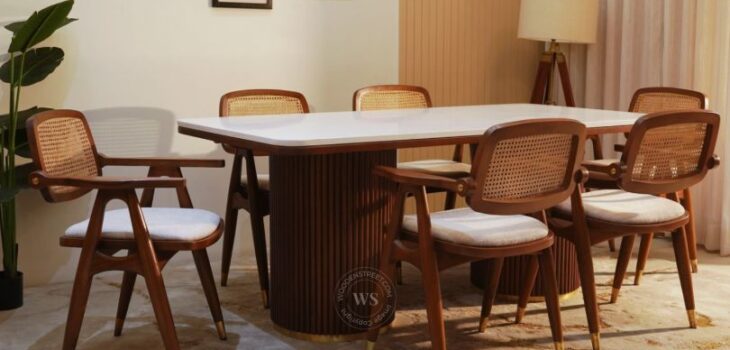
Medium-sized dining rooms offer more flexibility in choosing a dining table set. In these spaces, a rectangular table is a popular choice, accommodating more guests without overpowering the room. Six-seater sets work particularly well, offering a balance between seating capacity and space efficiency. Oval tables are another excellent option, as they provide ample seating while maintaining a softer, more flowing look that blends well with both traditional and modern interiors. In medium-sized rooms, the choice of chairs also matters; opting for sleeker designs can preserve open space and avoid a cluttered appearance.
Large Rooms and Grand Dining Arrangements
For expansive dining rooms, larger dining table sets can be used to make a bold visual statement. An eight-seater or even a ten-seater table can become a central feature, creating an atmosphere of hospitality and abundance. In such spaces, long rectangular or oversized oval tables work beautifully, complementing the room’s scale while offering generous seating for family gatherings or social events. With larger dimensions, you also have the flexibility to explore more elaborate chair designs, decorative centerpieces, and additional serving furniture like sideboards or buffet tables without crowding the space.
The Role of Room Shape in Choosing Table Size
It’s not only the size of the room that influences the choice of a dining table set but also its shape. A long and narrow room may benefit from a slim rectangular table that mirrors its proportions, whereas a square room may be better suited for a round or square table to maintain symmetry. Choosing a table shape that complements the room’s layout helps maintain a harmonious flow and ensures the space remains comfortable and functional.
Seating Capacity and Comfort
While maximizing seating capacity might be tempting, overcrowding a dining table can diminish comfort and usability. Each diner should have enough elbow room and personal space to eat comfortably. Generally, a width of 24 inches per person is considered ideal, though this can vary depending on the style of chairs used. In small spaces, opting for benches instead of individual chairs can increase seating flexibility while maintaining a compact footprint.
Balancing Style and Practicality
When selecting a dining table set size, it’s important to strike the right balance between aesthetics and practicality. A table that is proportionate to the room will not only look visually pleasing but will also enhance ease of use. Oversized furniture can create visual heaviness, making the room feel smaller, while undersized furniture may leave the space looking empty and unfinished. Coordinating the table’s design with the room’s décor and color scheme ensures a cohesive look, while choosing a durable material ensures long-term functionality.
Considering Multi-Use Dining Areas
In many modern homes, dining areas are multipurpose spaces, doubling as workstations, study areas, or gathering spots for activities beyond meals. In such cases, the size of the dining table set should allow for this versatility. Extendable tables are a great solution, providing extra seating when needed but keeping the footprint manageable during everyday use. Pairing the table with lightweight chairs makes it easier to rearrange the setup according to changing needs.
Conclusion
Selecting the right dining table set size for your room involves more than simply matching numbers—it requires an understanding of space, proportion, and function. By considering room dimensions, shape, seating needs, and potential multi-use scenarios, you can choose a table that not only fits but enhances the space. Whether you are furnishing a compact dining nook or a grand formal dining room, the right size ensures comfort, functionality, and a welcoming atmosphere that will serve you well for years to come